Iranian FMs Speech at BRICS summit on environment and global health
Iranian FM at BRICS summit on environment and global health: Historical responsibility for much of world’s environmental challenges lies with developed countries
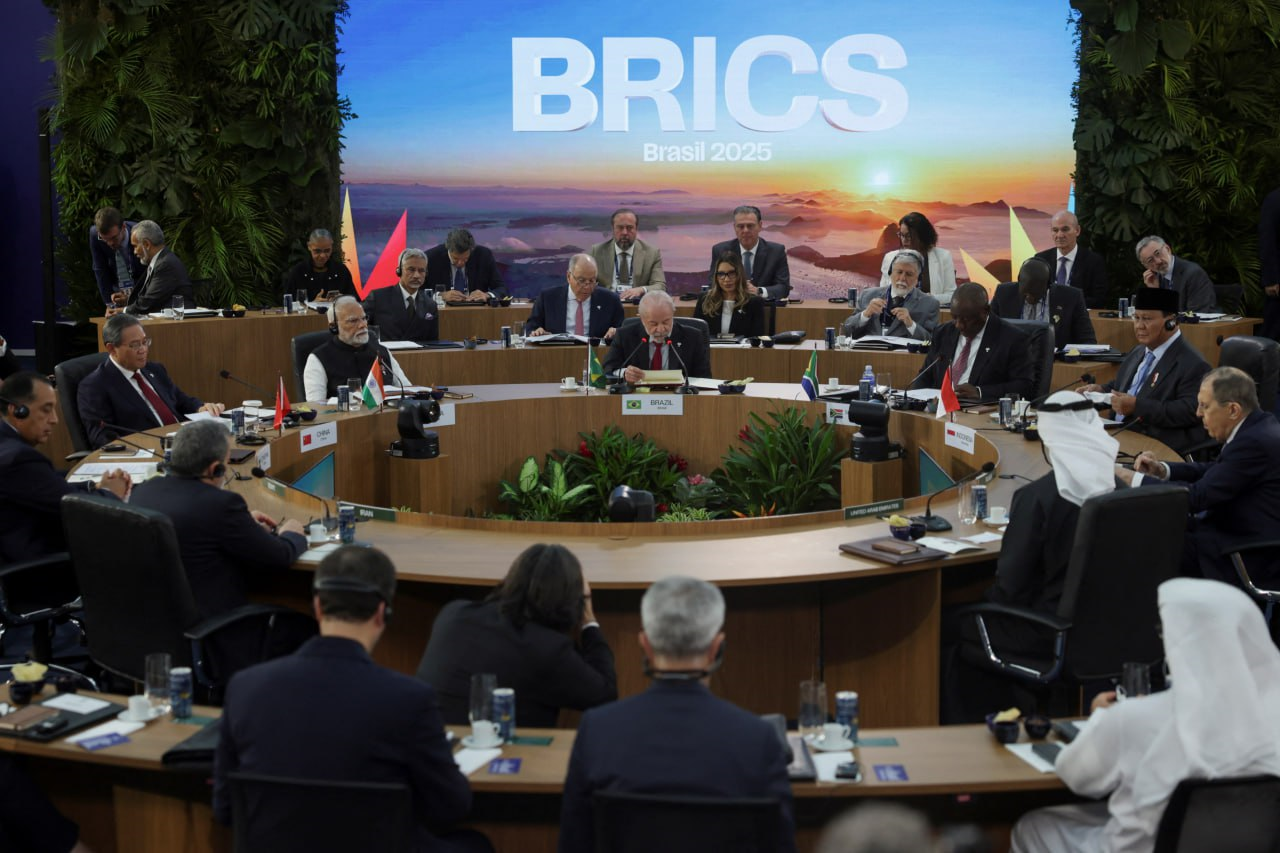
Iranian Foreign Minister Seyed Abbas Araghchi has underlined the crucial role of BRICS as a symbol of South-South cooperation and the independent voice of nations while speaking at the BRICS Summit in Brazil on the topic of environment and global health.
Araghchi said, “Today, humanity faces a series of interconnected crises, from the profound impacts of climate change and environmental degradation to increasing threats to global health, and ultimately the unjust structures that hinder the progress of developing countries”.
The foreign minister noted that climate change is no longer just a threat to the future but a current reality whose effects are increasingly felt daily. “Rising temperatures, water scarcity, widespread wildfires, destruction of ecosystems, and climate-induced migrations have become the lived reality of millions”, he said.
Aragchi then spoke about Iran’s position in a climate-vulnerable region, saying, “We have implemented domestic programs focused on water resource management, renewable energy development, and restoration of native ecosystems”.
The top Iranian diplomat stressed that an effective climate crisis response requires climate justice, acknowledging the historical responsibility of developed countries for environmental destruction and their vital role in providing financial resources and transferring clean technologies to developing nations.
Meanwhile, Araghchi voiced concern over the failure of industrialized and developed governments to fulfill their commitments, attributing a large share of global environmental challenges such as greenhouse gas accumulation, global warming, and various pollution to actions by developed countries. He noted that these countries must not only lead in reducing emissions and combating pollution but also, given their historical responsibility, provide financial resources, technical assistance, and environmentally compatible technologies to compensate for damages inflicted on developing countries.
The foreign minister pointed out that sanctions and geopolitical tensions undermine climate cooperation and hinder coordinated action. “Unjust sanctions and unilateral coercive measures imposed by some developed countries on developing nations, including the Islamic Republic of Iran, under political pretexts, pose serious obstacles to these countries’ efforts," said Araghchi.
He went on to note that this contradicts the global community’s goals for joint action against the harmful effects of climate change and achieving sustainable development goals, especially poverty and hunger eradication.
Araghchi also touched upon the recent acts of aggression by the Zionist regime, followed by US involvement, on Iran’s nuclear facilities, describing these acts as violations of international law, the UN Charter, and the IAEA statute. “It is a worrying situation where two nuclear-armed regimes attack a non-nuclear-armed nation that is a signatory to the NPT whose nuclear activities are under comprehensive IAEA safeguards. These reckless and aggressive actions entail severe human, environmental, and irreparable ecological damages".
Iran’s foreign minister further stressed that the Islamic Republic of Iran, endowed with vast natural resources, human capacities, and a strategic geopolitical position, insists that decisions must be participatory, equitable, and based on the principle of common but differentiated responsibilities. "Accordingly, we call on BRICS to become the unified voice of the Global South on climate and environmental issues”, Araghchi said.